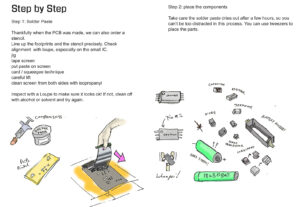
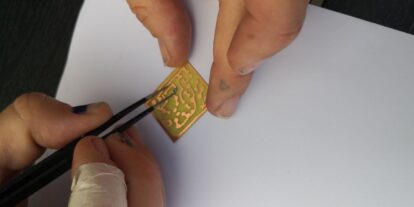
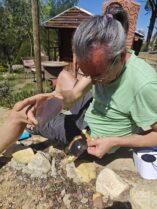
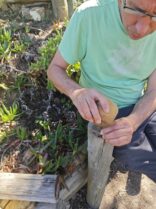
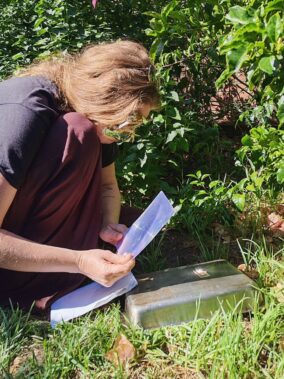
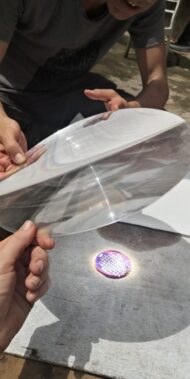
At GaudiLabs we’ve been working on ways to reflow solder without an energy-hungry electric oven, but rather using the passive power of the sun. We used a fresnel lens to concentrate the sunlight on our freshly etched and assembled circuit boards, which to our surprise worked far better than we could have anticipated. Our aim was to make and assemble the solar charger we were working on entirely without electricity. We started working on this in the context of research and workshops together with ALF Limbe, Cameroon, and also have had some successful practice and further developments in South Africa and Switzerland. This extends our toolkit of wild reflow soldering methods that already includes gas stoves, pizza ovens, open fires, raclette ovens, etc…
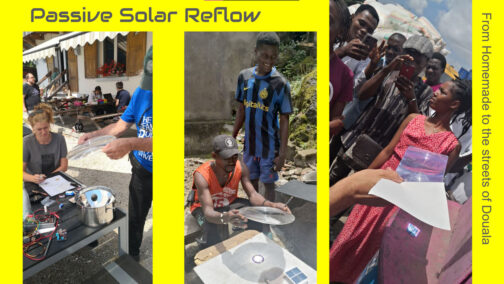
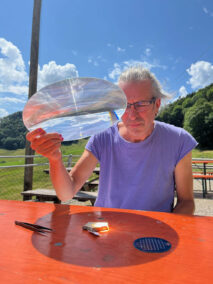
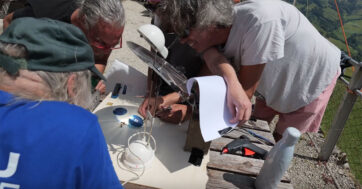
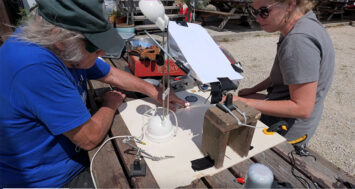
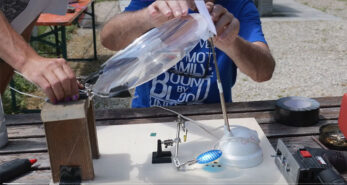

Things we have learnt:
– a regular magnifying glass works well too
– Wear proper eye protection!
– high ambient humidity can make the components pop off the board when they heat up – try dry it out first
– Best is if you have an already hot surface to put the board on before lens-reflowing
– That shit is really hot, take care of your fingers and tables and pack away the lens when not in use.
– Generally heat up the PCB with a slightly unfocussed lens for a bit, before focussing on the solder pads one by one.
– Take care not to burn or melt the actual component. With electromechanical parts like switches, wait for it to cool down before switching.
– We have successfully used low temperature solder paste, regular solder paste, as well as regular solder wire. It all depends on the sun intensity and technique.
– It’s a bit slower than regular soldering; a great excuse to sit around in the outdoors with your friends making PCBs together.
– Making a more solid manipulator and focusser would be the next step to do better production.
– Some examples of materials you can buy:
Fresnel Lens: https://de.aliexpress.com/item/1005006083780751.html
Bigger Fresnel Lens: https://de.aliexpress.com/item/1005004660516759.html
Low temp Solder paste: https://de.aliexpress.com/item/1005010541366789.html
Sn64.7Bi35Ag0.3 Lead Free Solder Paste, No-Clean Soldering Paste for SMT, Low Temperature
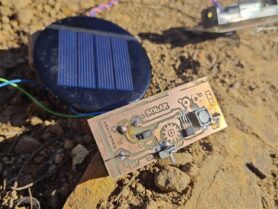


A challenge we face as DIY practitioners is the shrinking size of electronic components. Surface Mount Devices (SMDs) are becoming the norm, replacing the ‘through-hole’ components of the past few decades. While this miniaturization is great from a material sustainability perspective (let’s take a moment to celebrate how much less copper we use now with the ubiquity of transistors instead of the older, wire-wound transformers!), it’s difficult for independent tinkerers to work with these components without expensive tools and a factory full of robots. DIY frustration grows as online stores stop selling through-hole components. How can we, as DIY practitioners, repairists, actual of our own electronic devices, as artists redefining what is possible with these technologies, continue striving to be active agents in this system already so intent on locking (or literally glueing) us out? And, to go even further, how can we do so in a way that is radically sustainable, even regenerative? I’m not going to pretend that the materials and processes we are using here are without negative externalities, but we push back where we can.
Some More on the Reflow process: